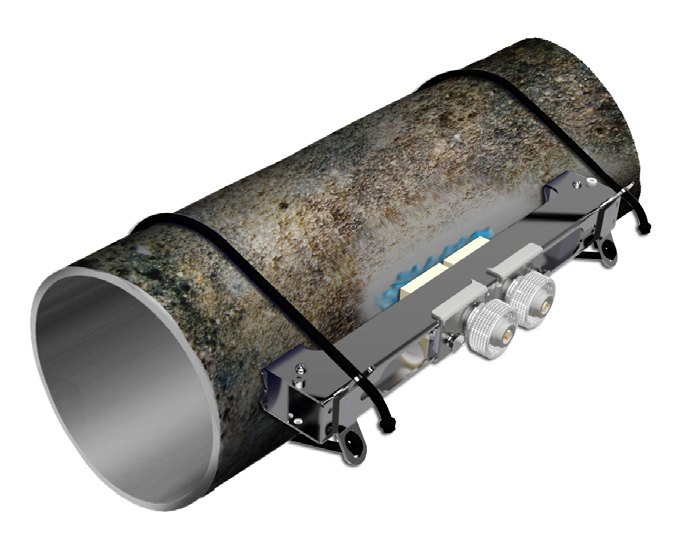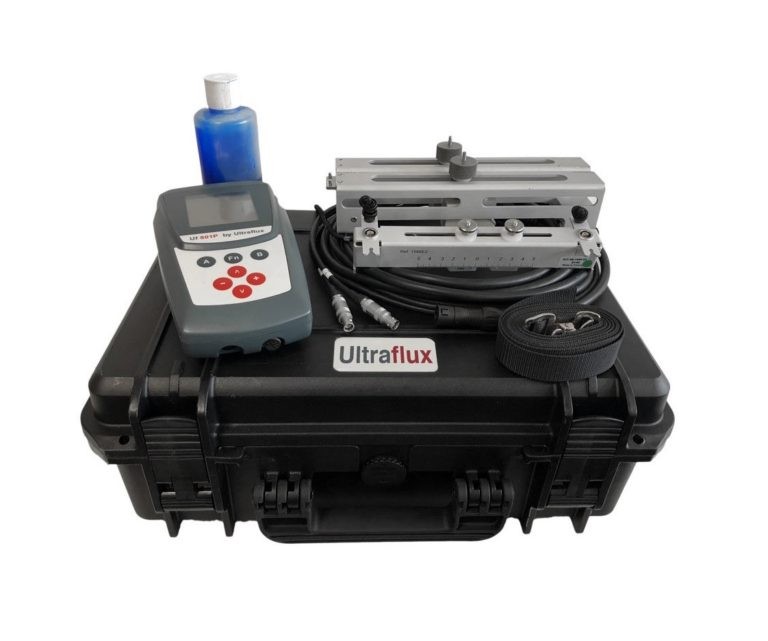
Non-invasive flow measurement on a live line. No cutting, no welding, no shutdown — and nothing in the process stream to corrode, foul, or wear out.
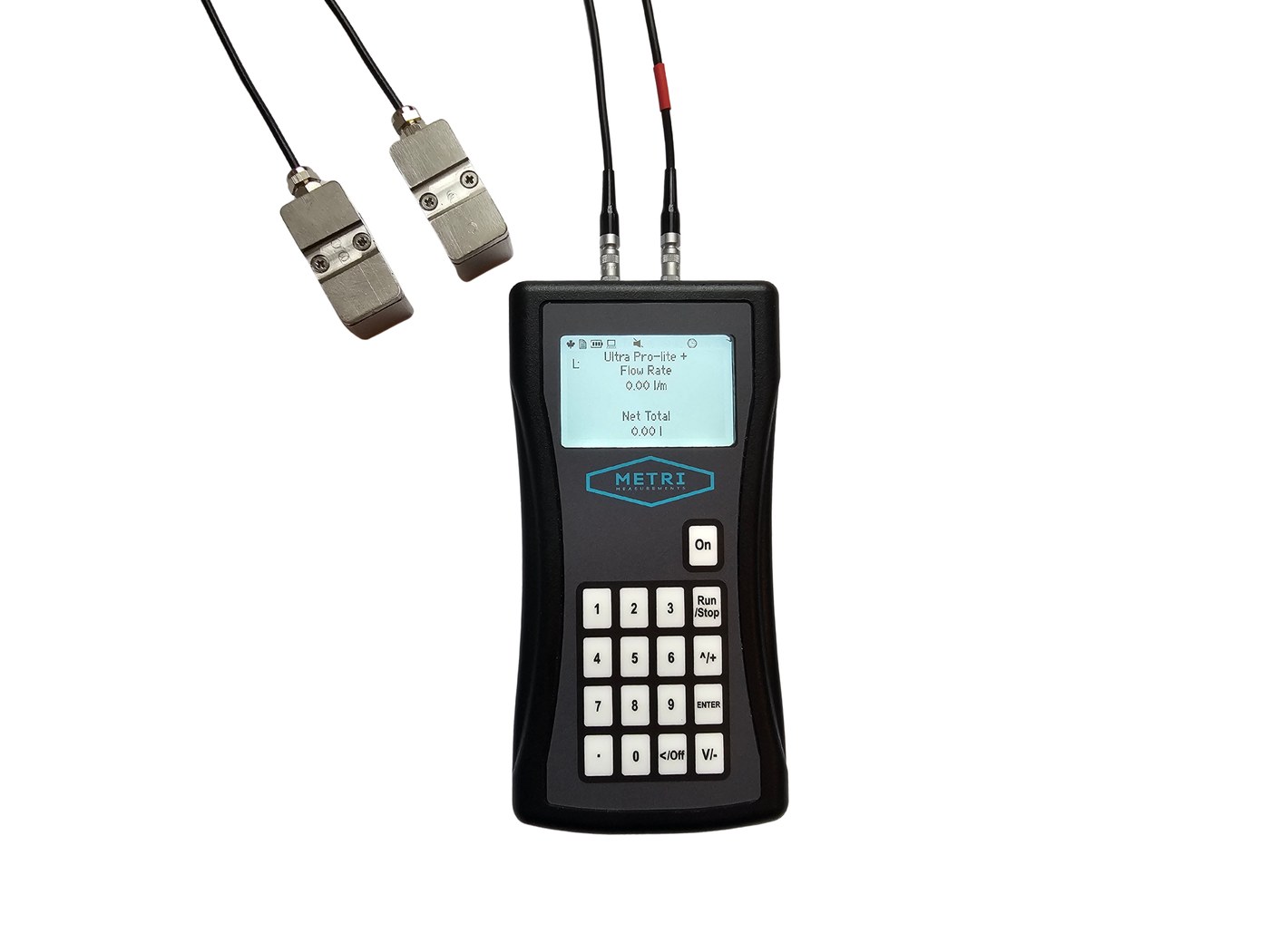
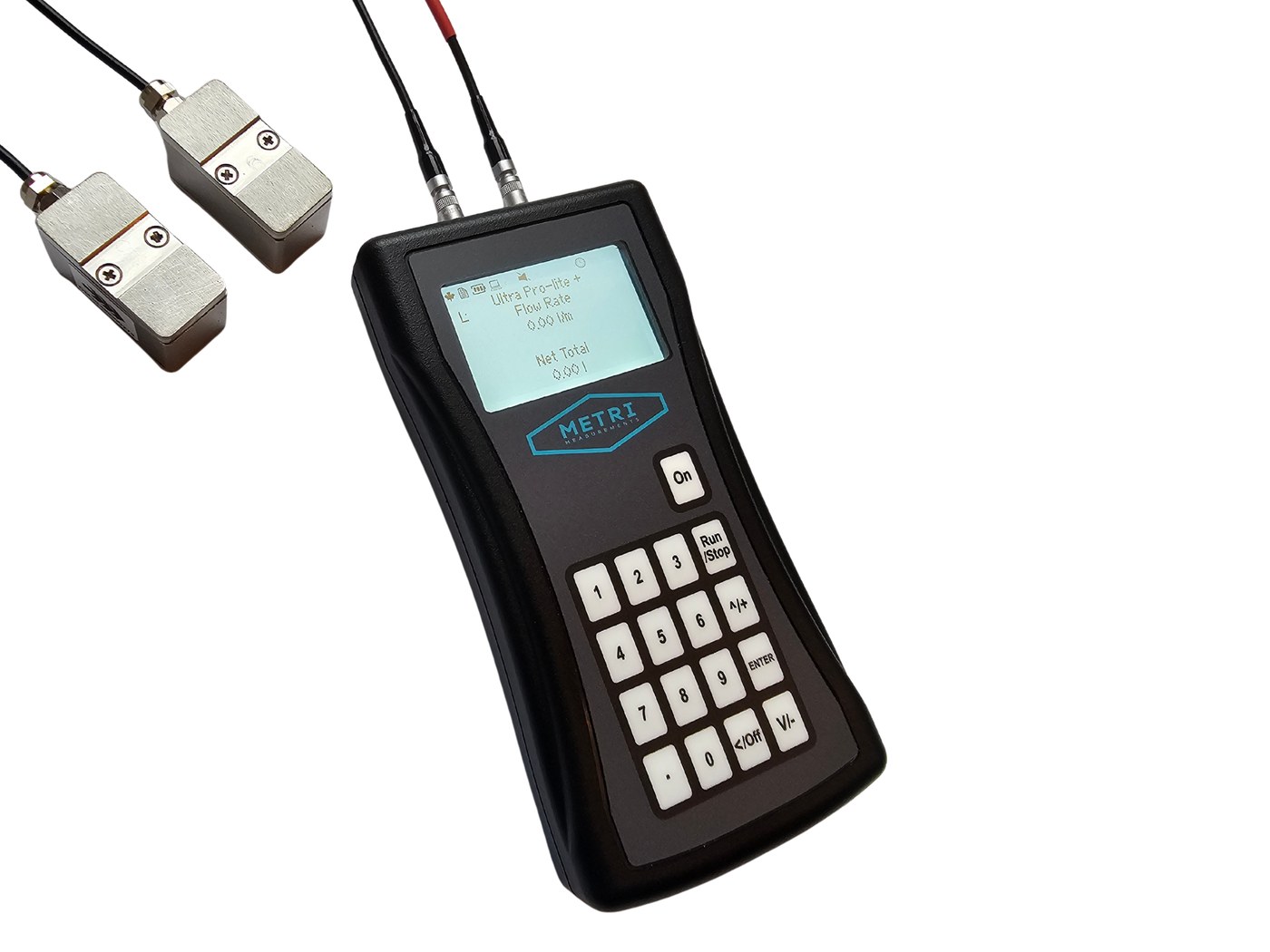
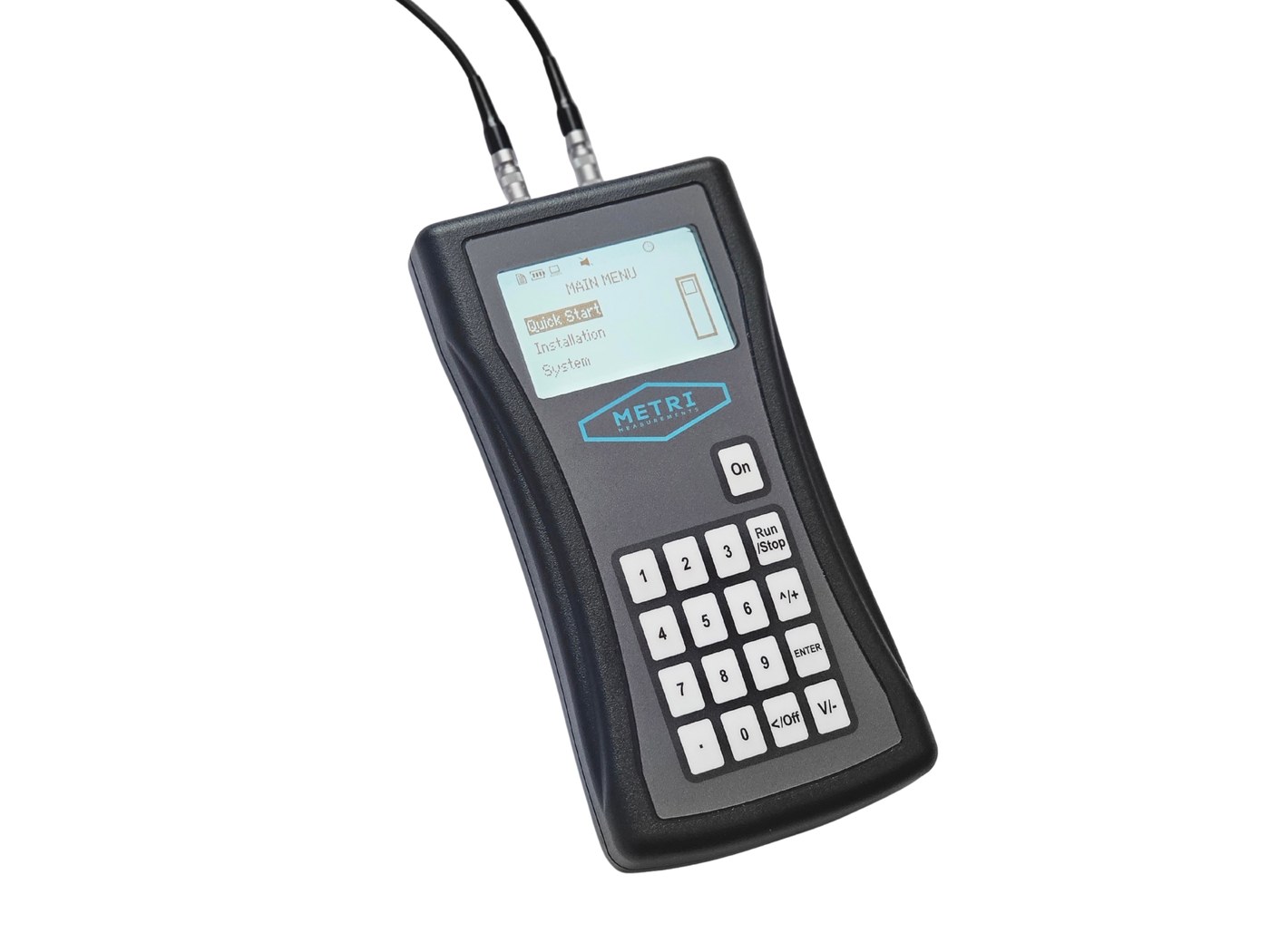
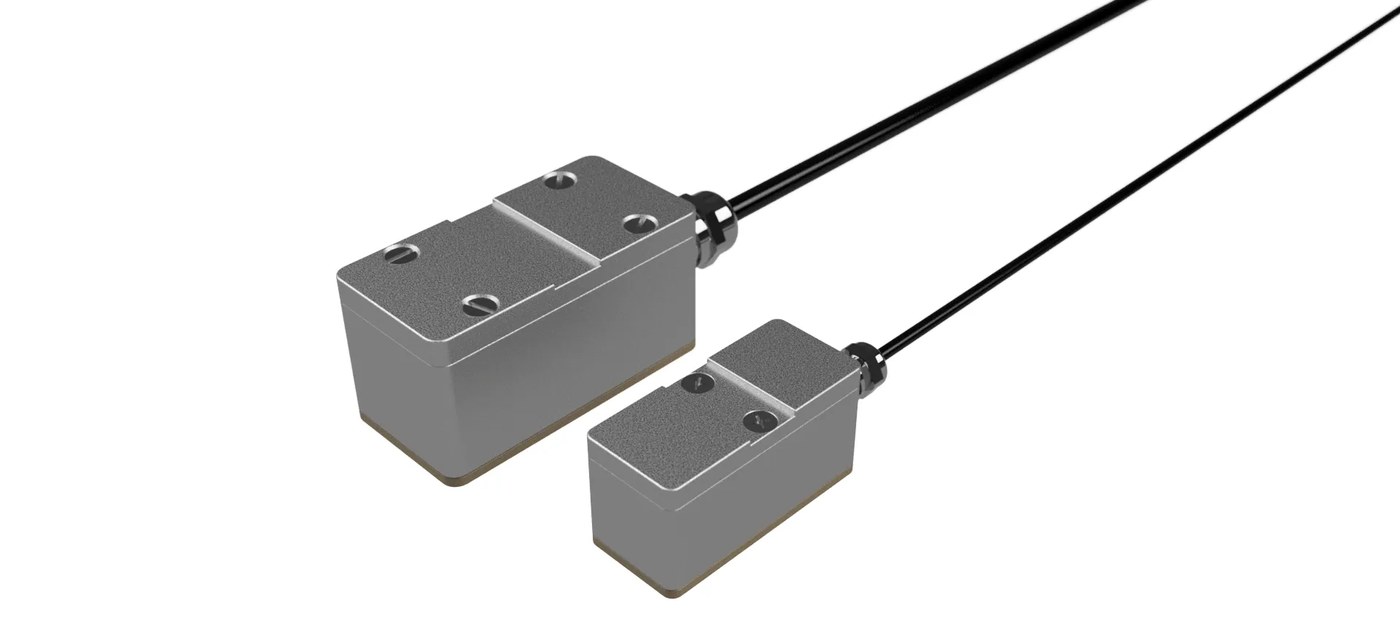
Portable clamp-on ultrasonic flow meter · DN10–DN2000 · Made in Britain
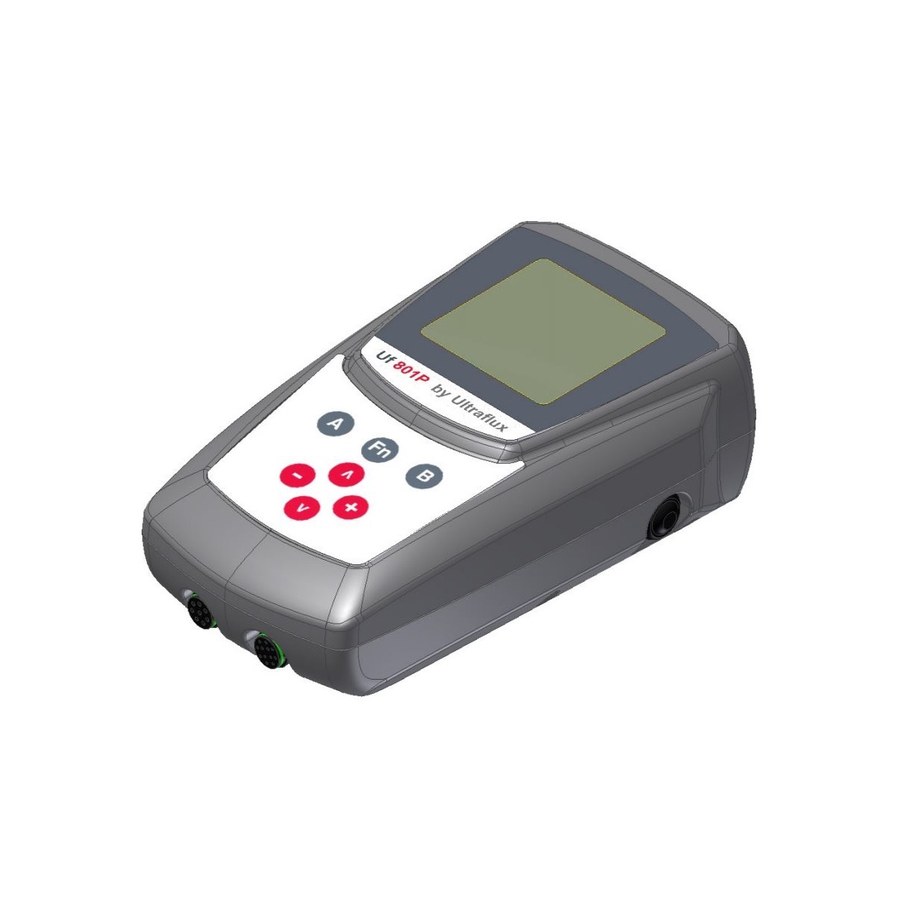
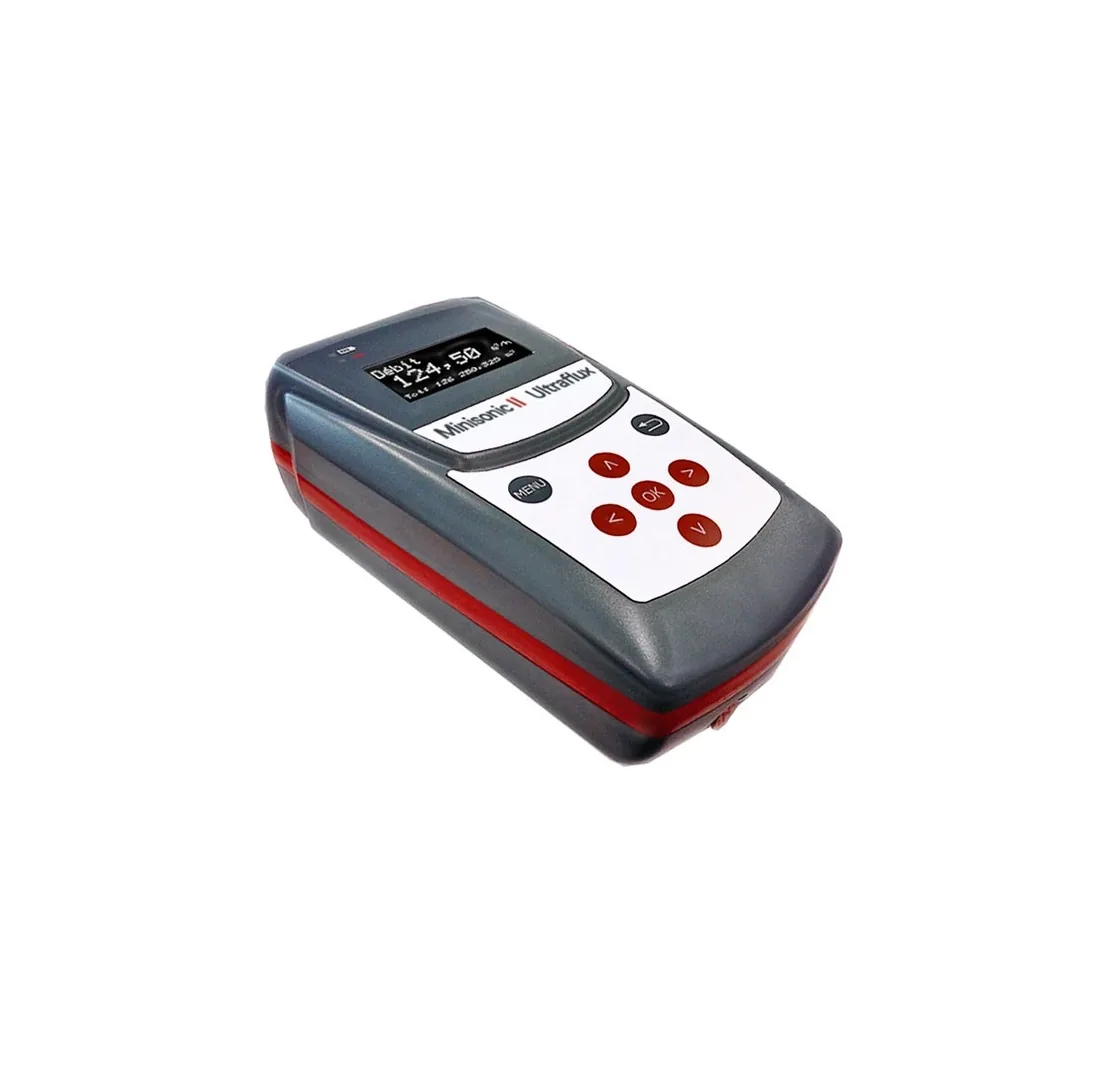
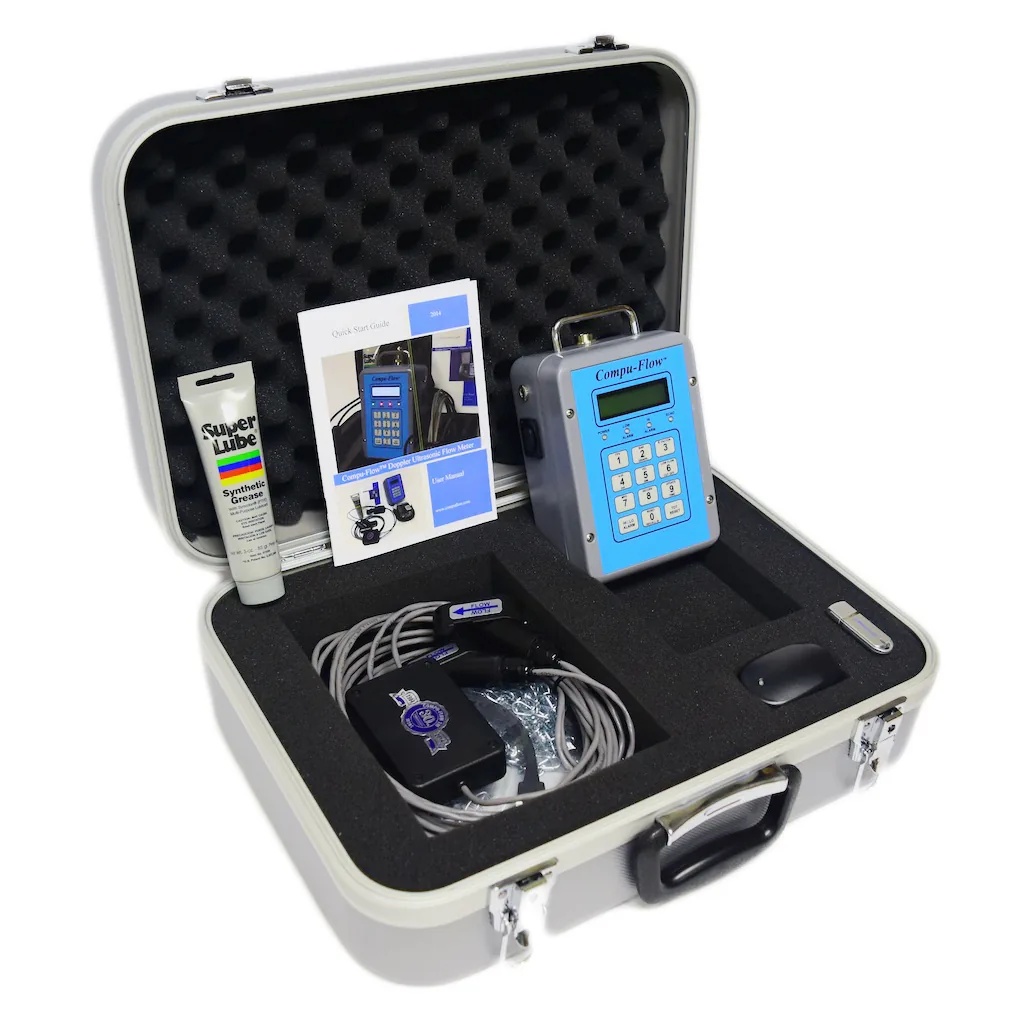
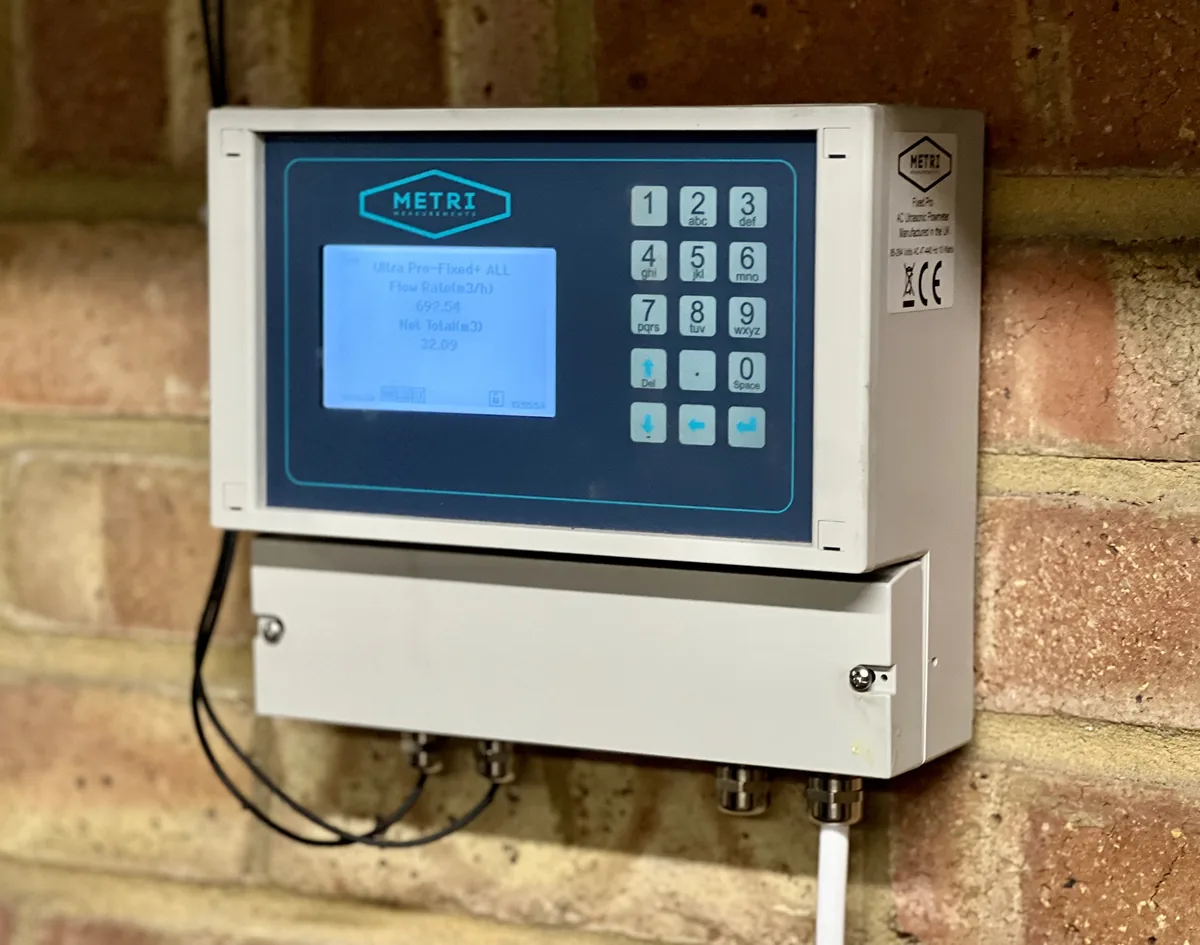
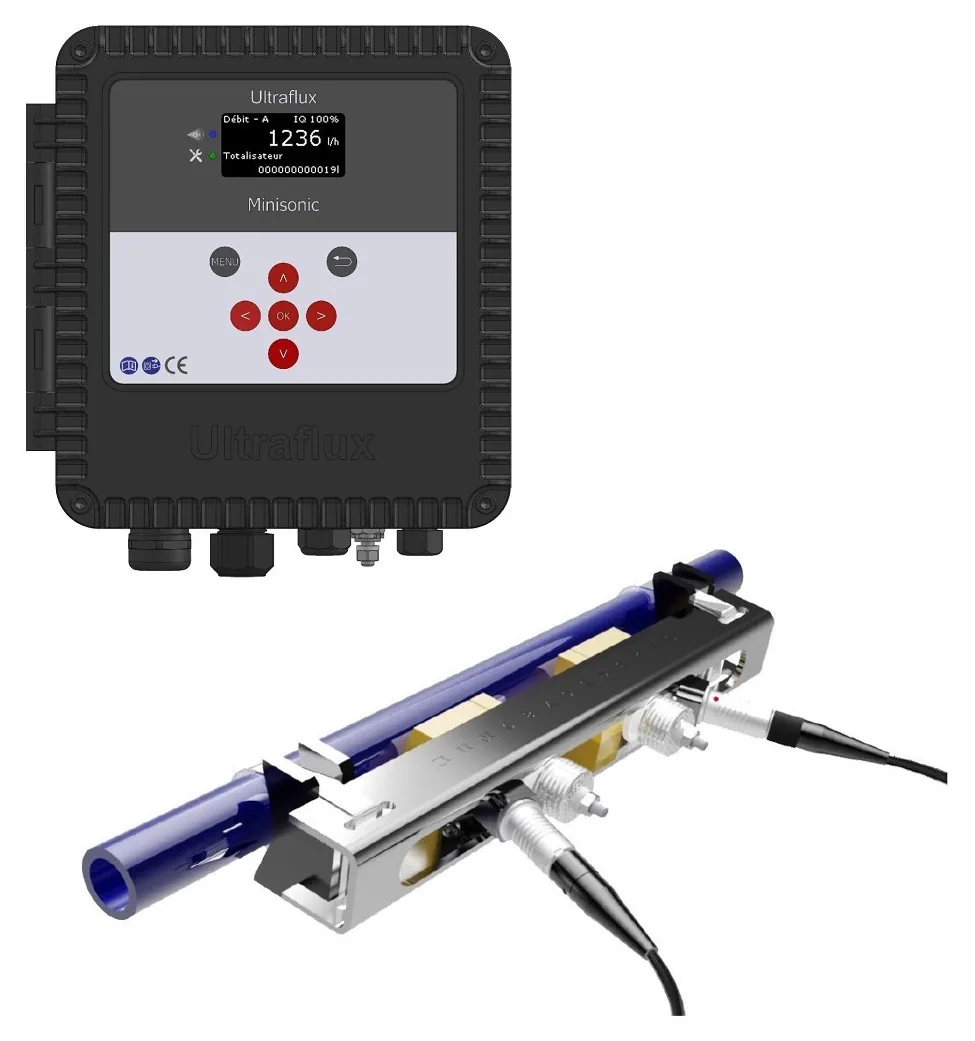
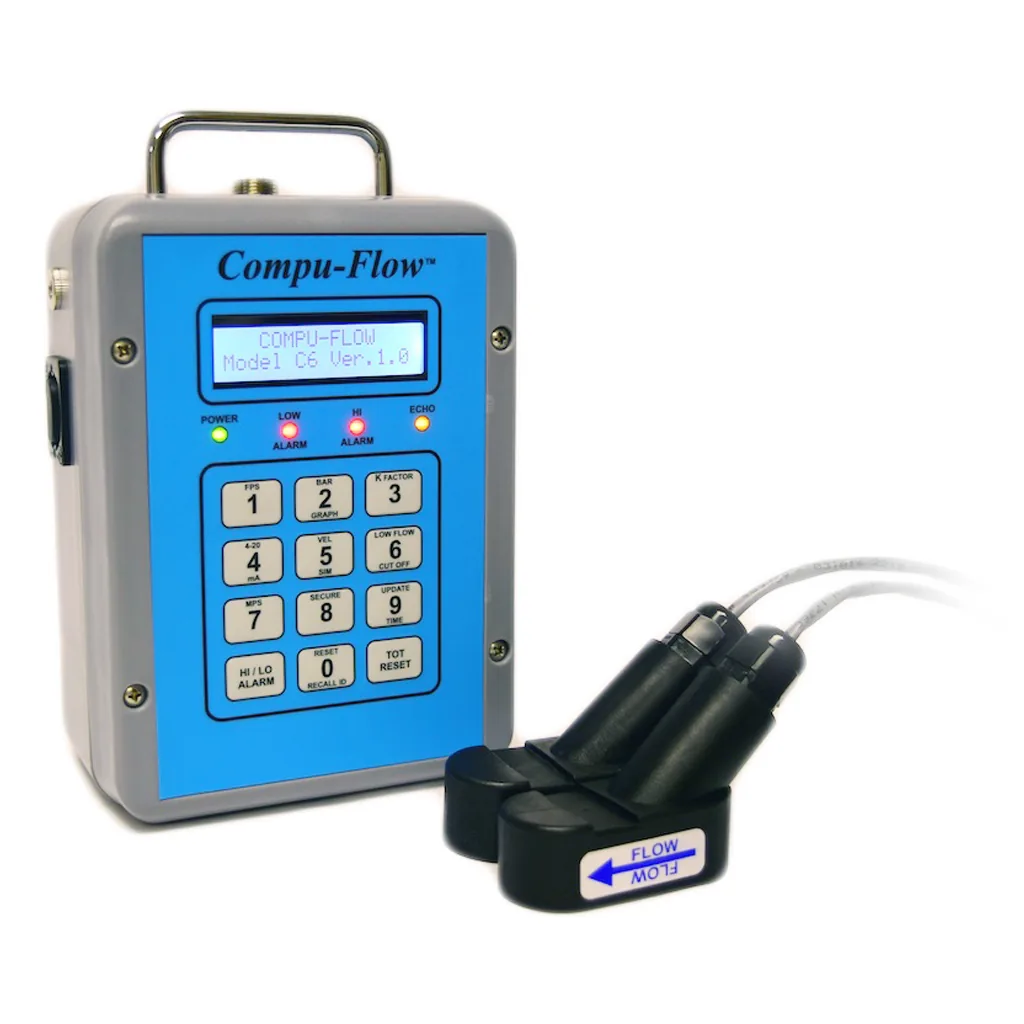
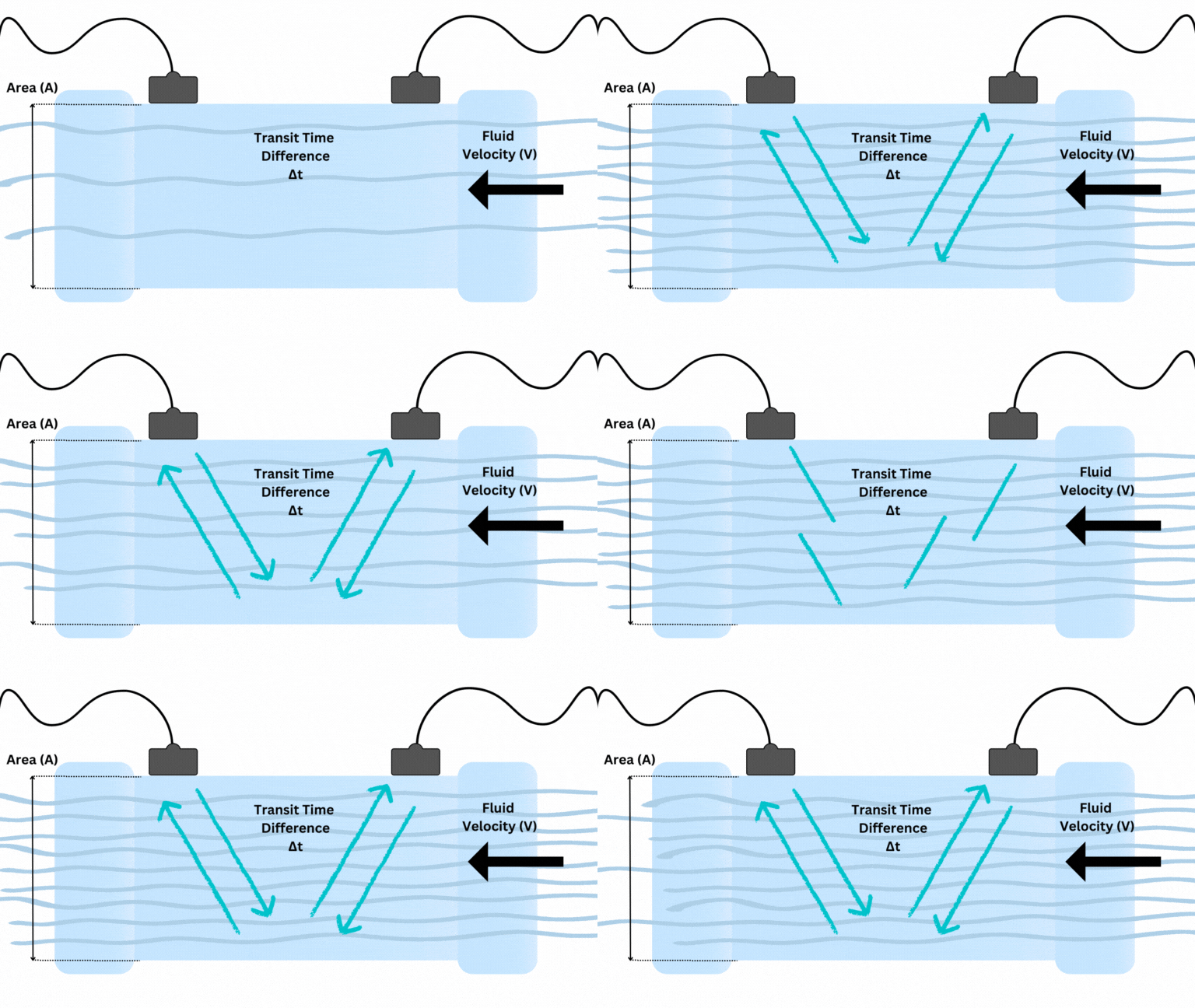
A clamp-on flow meter is an ultrasonic flow meter whose transducers mount on the outside of an existing pipe. Nothing enters the pipe. Nothing touches the fluid. The instrument fires sound through the pipe wall, into the liquid, and measures what comes back.
That single design decision — external transducers instead of a wetted element — is what makes the whole category worth caring about. Every other common flow technology asks you to break the line. A magnetic flow meter needs a spool piece bolted into the run. A turbine meter puts a rotor in the stream. A Coriolis meter is a piece of pipe. An orifice plate is a deliberate obstruction. All of them mean a shutdown, a cut, a weld or flange set, a new gasket, a new leak path, and a permanent pressure drop for as long as the meter lives there.
A clamp-on ultrasonic flow meter means a technician with a strap, a tube of couplant, and forty minutes.
People arrive at this technology with a lot of different words for it. Some search for a non-invasive flow meter. Some say non-intrusive flow meter, external flow meter, strap-on flow meter, or non-contact flow meter. Engineers who already know the physics search for a transit-time ultrasonic flow meter. Same thing, same reason: the line cannot come down.
This is the reason, most of the time. A refinery unit, a district cooling loop, a municipal transmission main, a chilled water riser feeding a data hall — the flow you most need to measure is very often the flow you are least allowed to interrupt. A clamp-on meter installs on a live, pressurized, full pipe. The process never knows you were there.
Sulfuric acid. Sodium hypochlorite. Hot caustic. Solvents. Or the inverse problem — de-ionized and ultrapure water, where a wetted sensor contaminates the product. When the fluid is aggressive or the purity spec is absolute, the safest sensor is the one that never touches it.
Cutting a 48-inch line to install an inline meter is a capital project. Clamping transducers to a 48-inch line is an afternoon. Clamp-on economics improve as diameter grows, and above roughly 12 inches it is frequently the only proposal that survives contact with a budget.
Energy audits. Pump curve verification. Hydronic balancing. Proving out an existing meter nobody trusts. Chasing non-revenue water across a distribution network. None of these justify a permanent instrument. All are solved by a portable clamp-on flow meter that walks up to the pipe, gives you the number, logs it, and leaves.
Clamp-on is not universally better. It is situationally better, and the situations are common enough that most plants have several. Where it genuinely loses: very small pipes, very low flows, partially full pipes, and single-path custody-transfer accuracy. We will tell you when that is your case. A meter that cannot deliver the number you need is not a sale, it is a return.
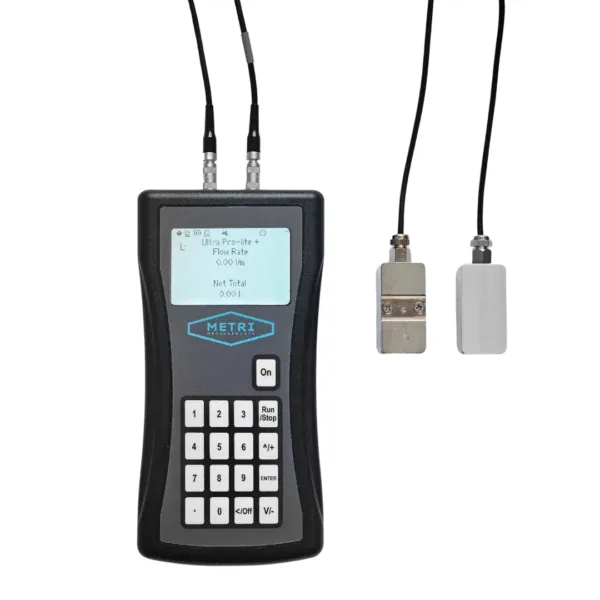
PortableInstruments you carry to the pipe. Surveys, energy audits, hydronic balancing, meter verification, leak detection. Four instruments from 230 g to full survey kit.
From $3,999
Portable range
FixedPermanent non-invasive metering with 4–20 mA, pulse, Modbus, and RS232 into your control system. Transit-time and Doppler.
From $6,890
Fixed range
DopplerFor sludge, slurry, and raw wastewater — the fluids that make a transit-time meter go blind.
From $6,990
Doppler range
BTU / EnergyFlow plus supply and return temperature equals thermal energy. Non-invasive energy audits and district energy sub-metering.
BTU meters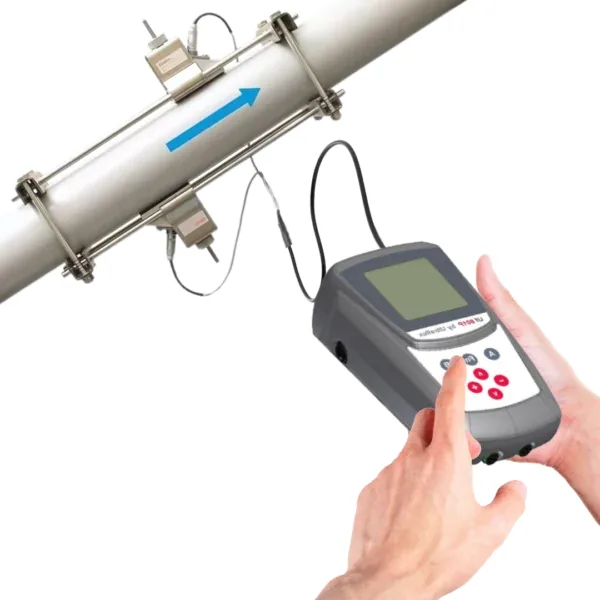 Rental
Houston-based, shipping nationwide. If you need the number once, do not buy an instrument.
RentalNot renders. Not stock photography. These are Seztec instruments on real lines — and the captions are the parts of the job that actually decide whether the number is any good.
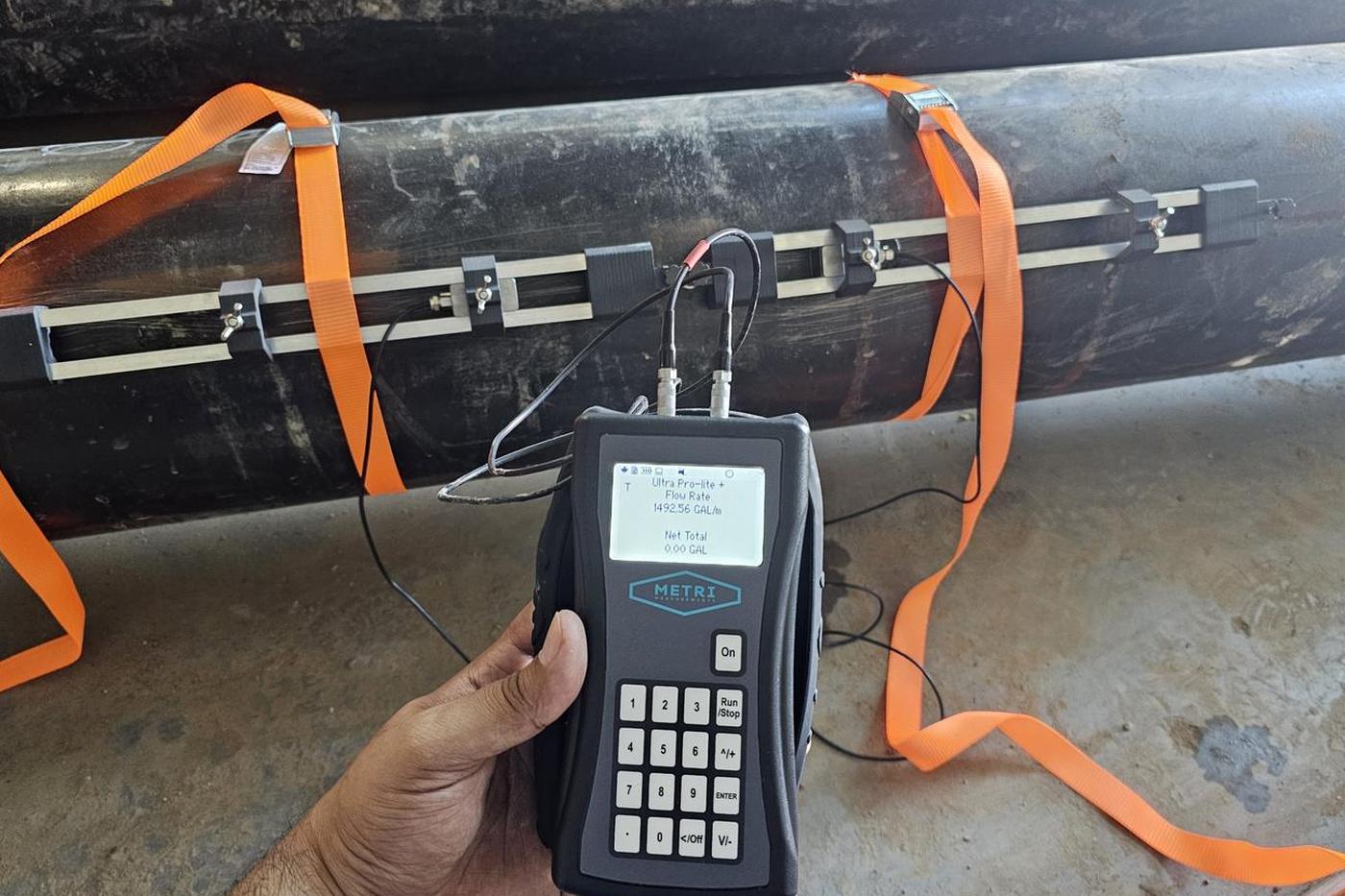
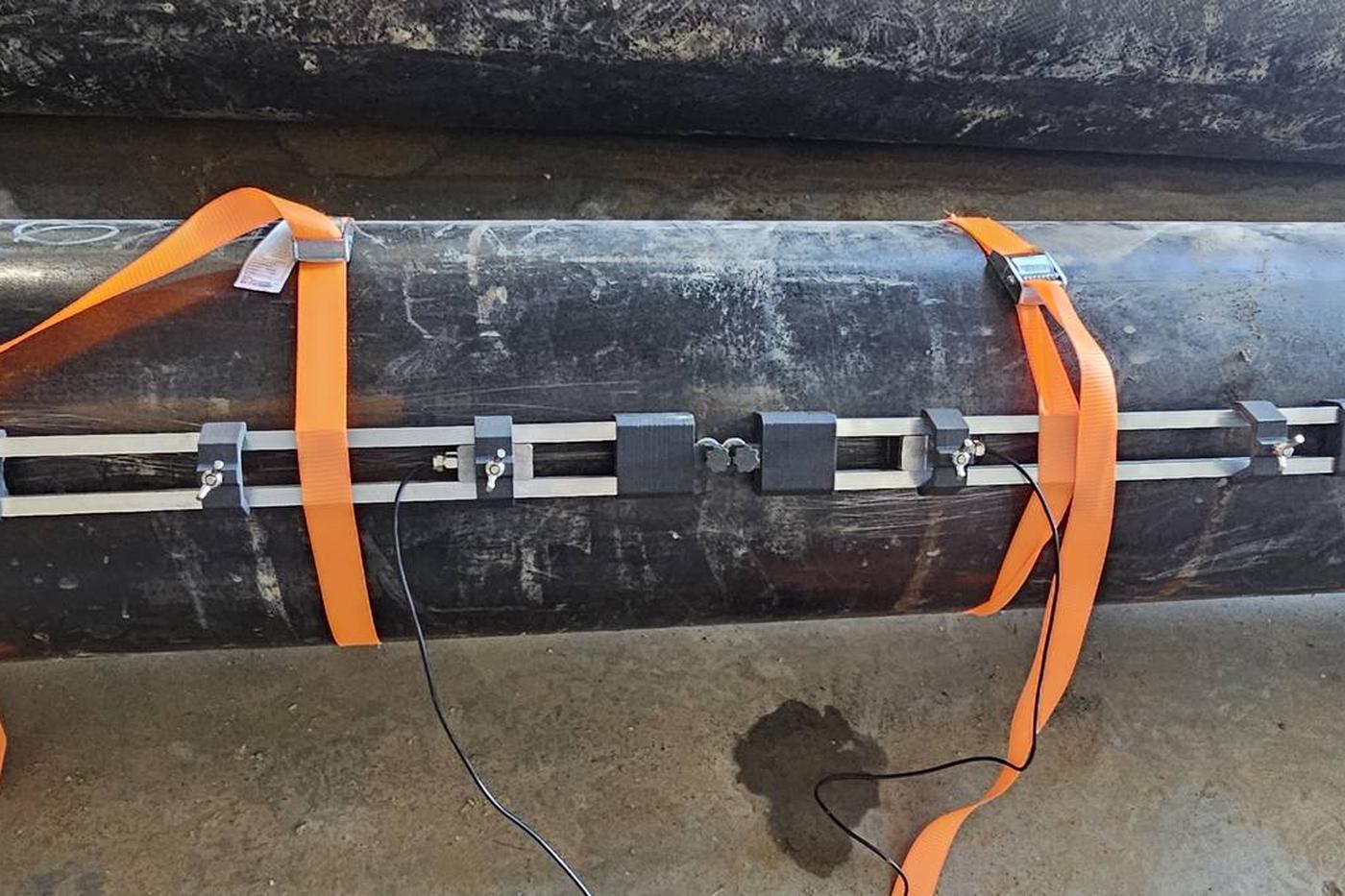
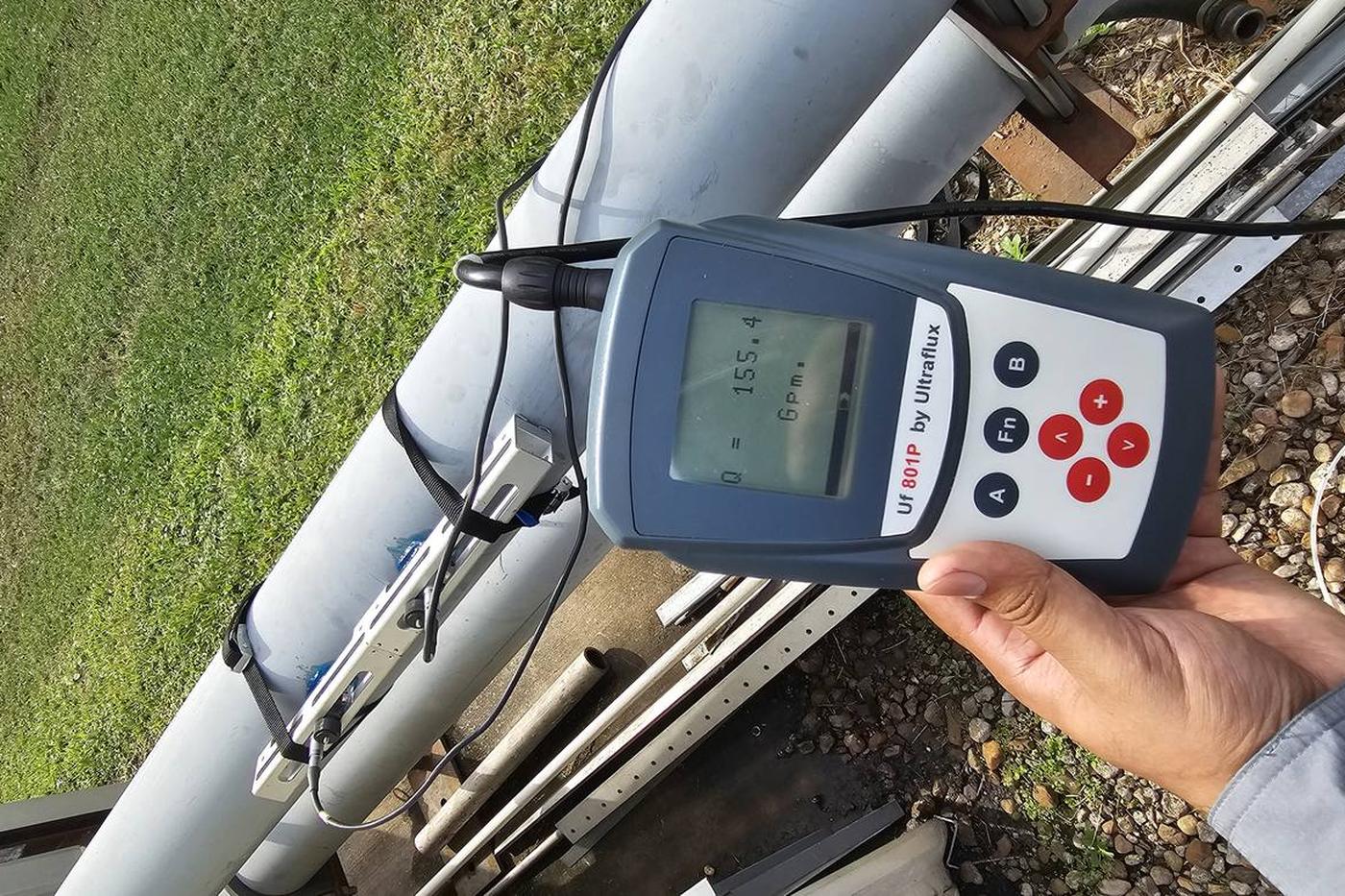
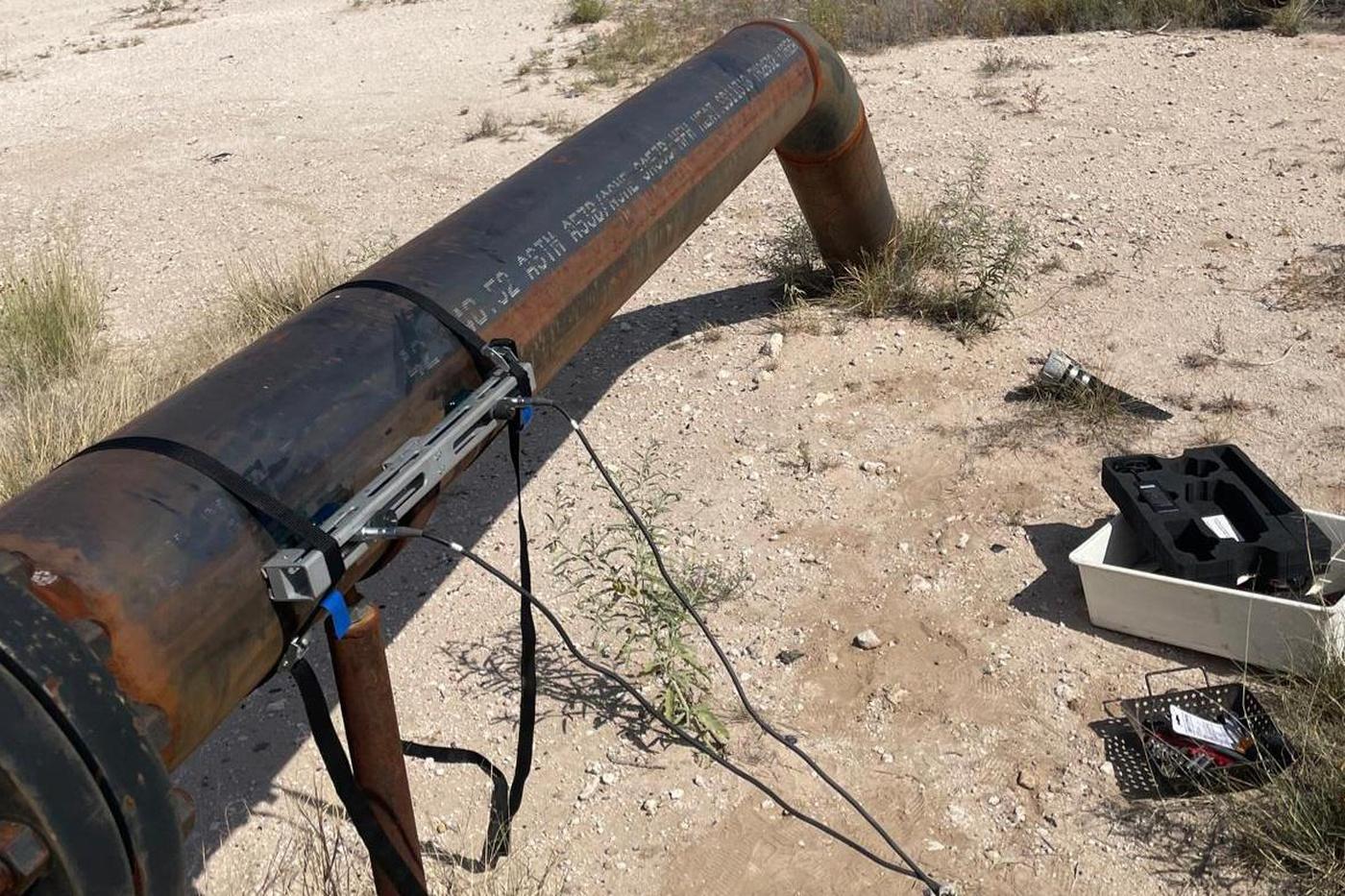
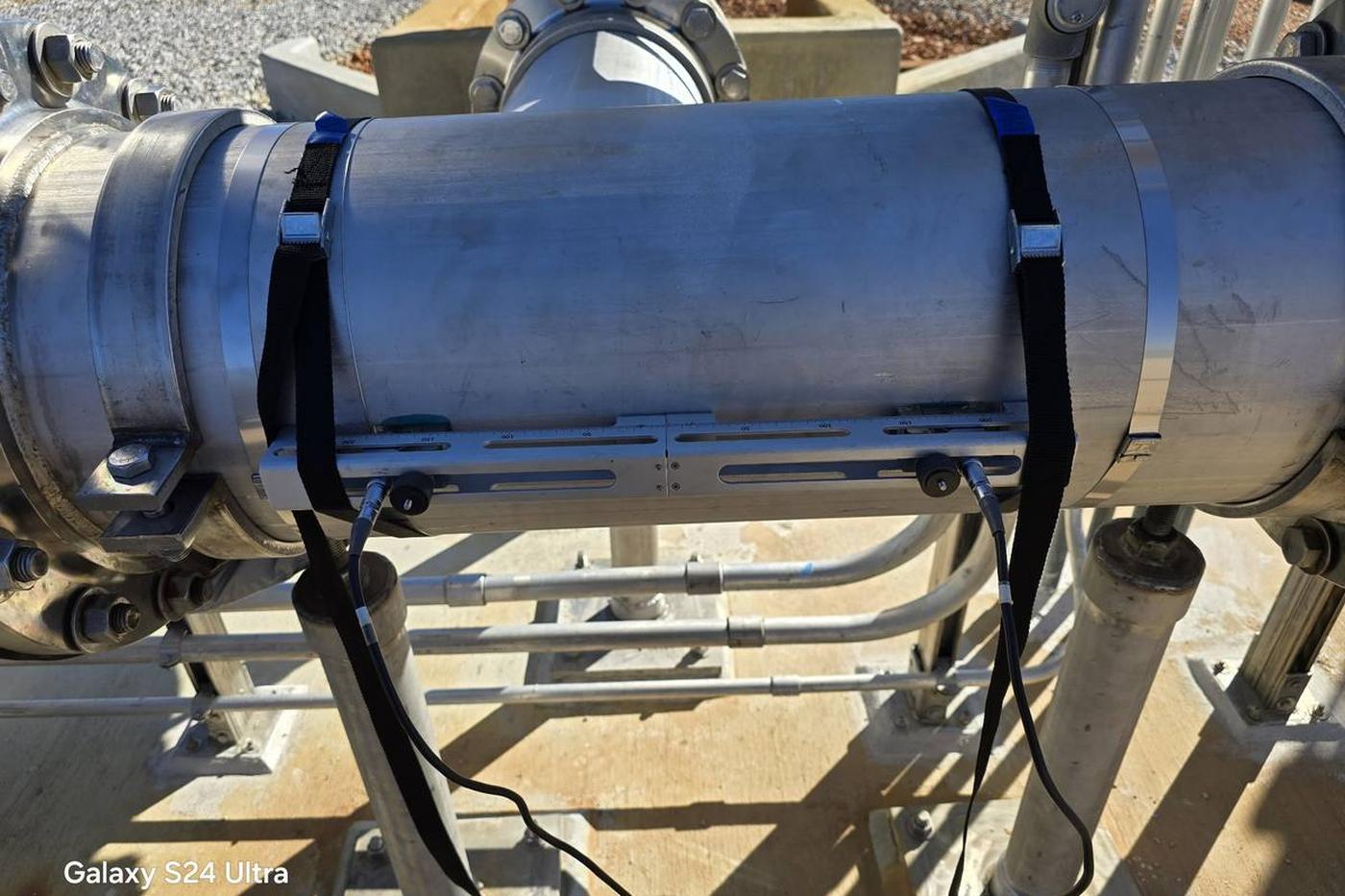
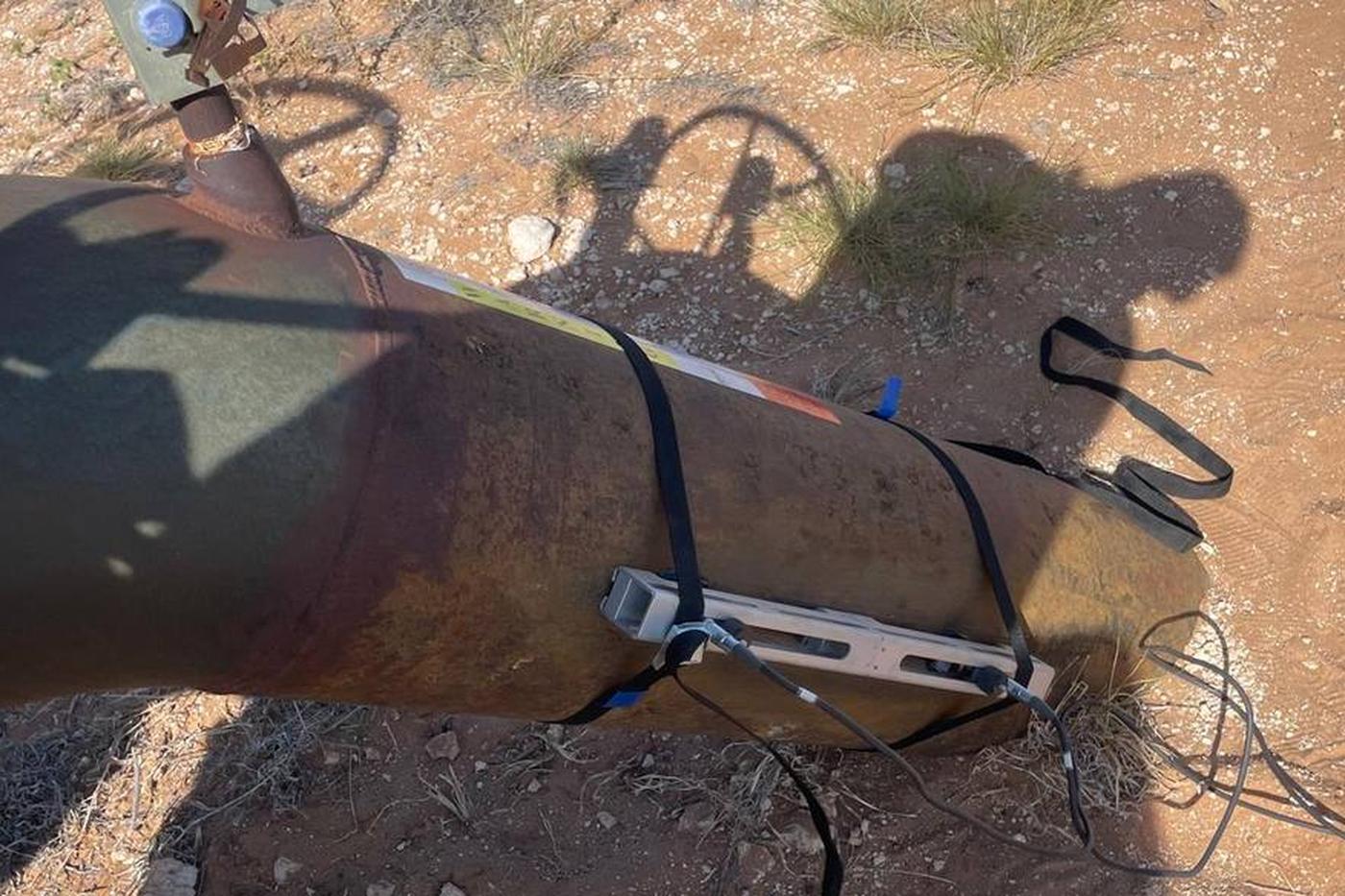
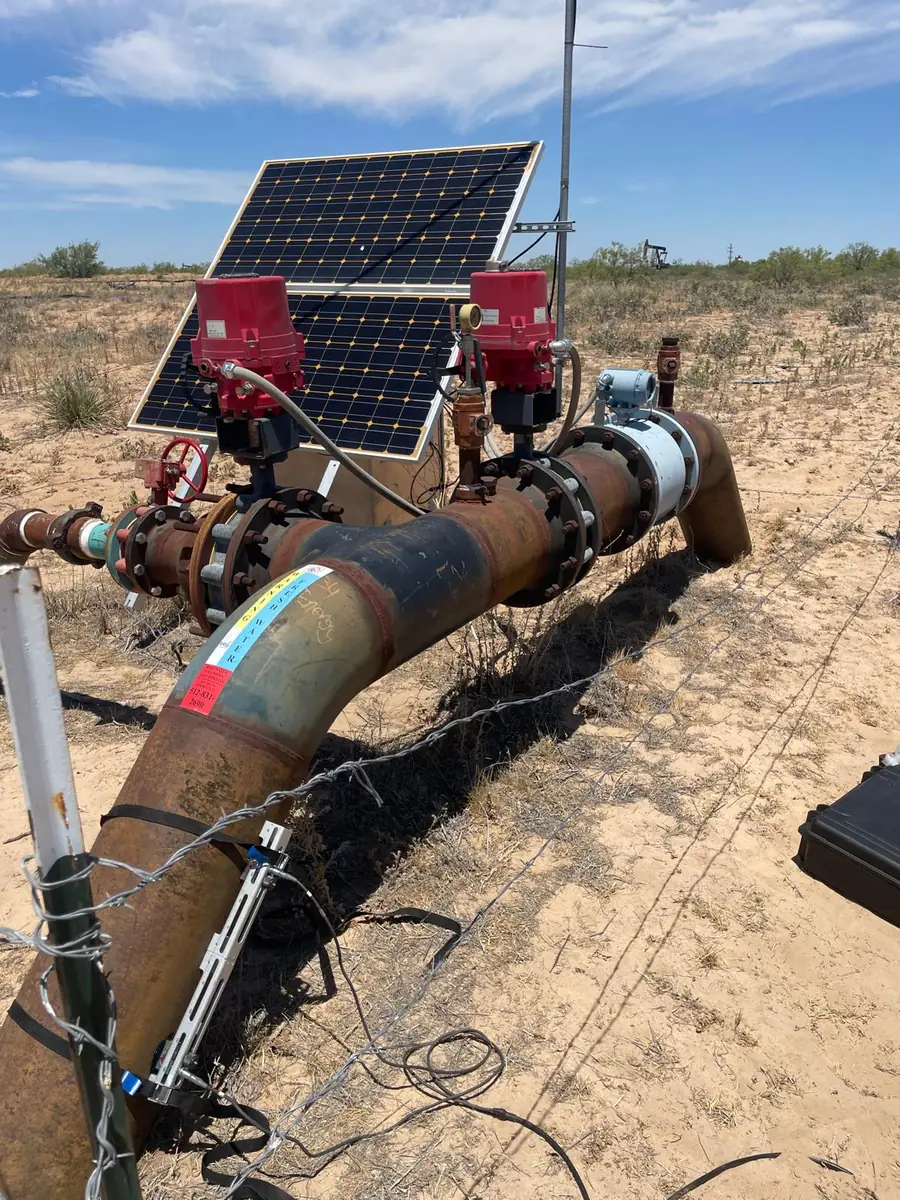
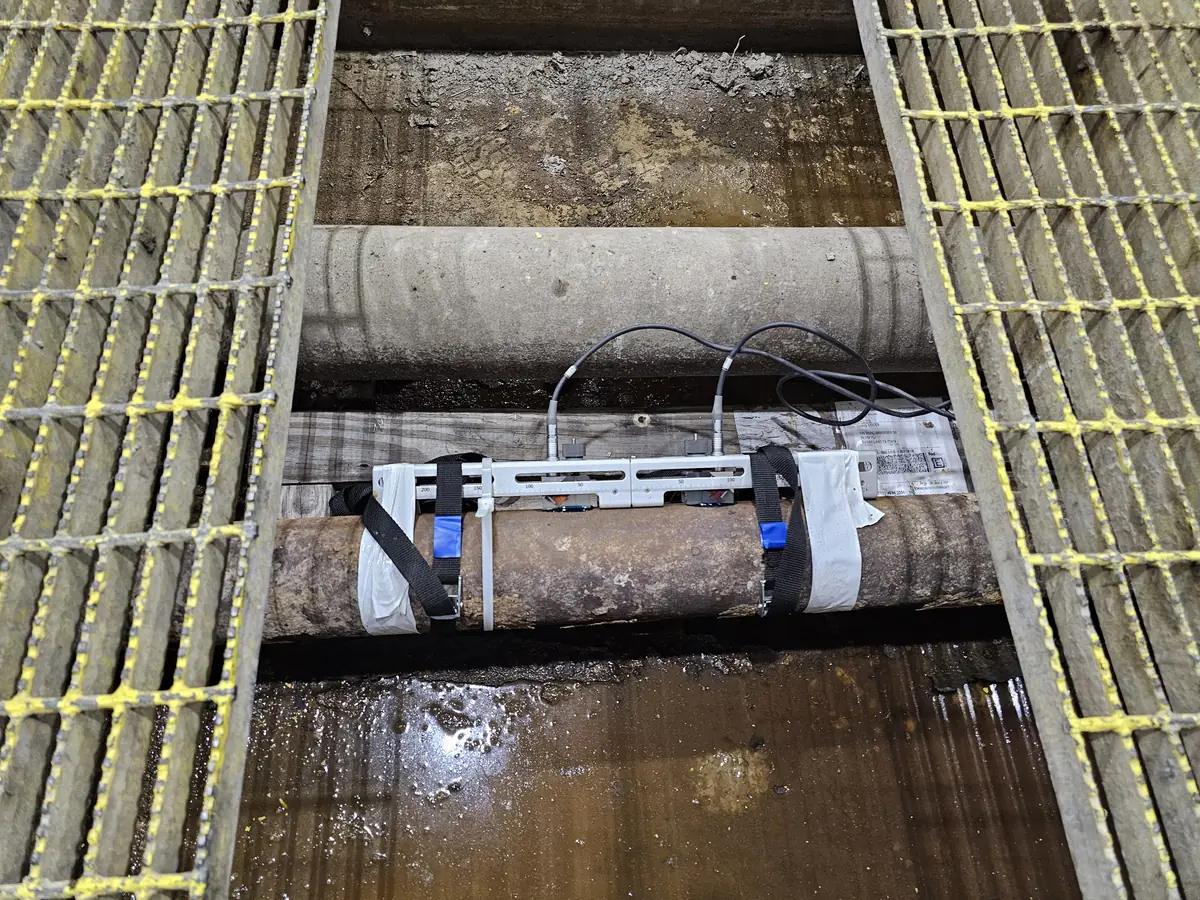
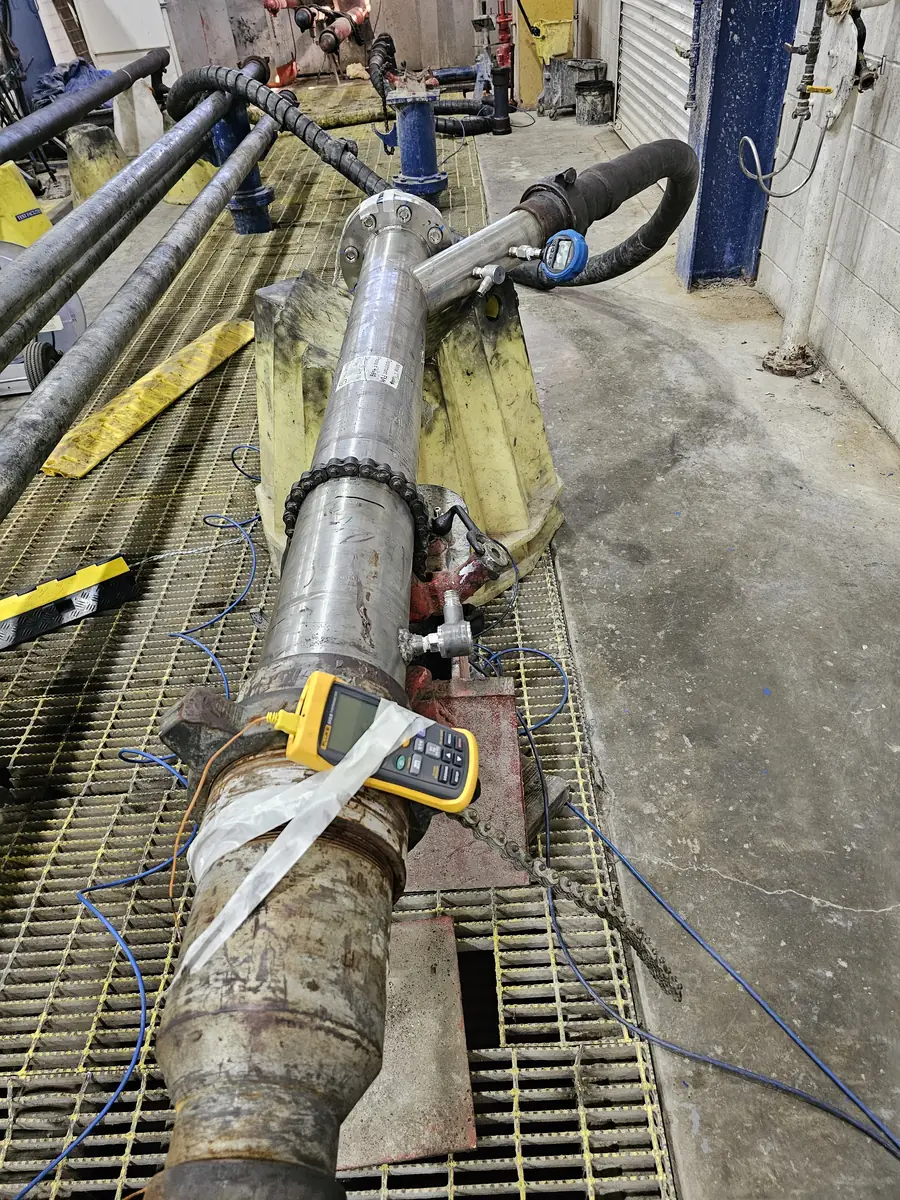
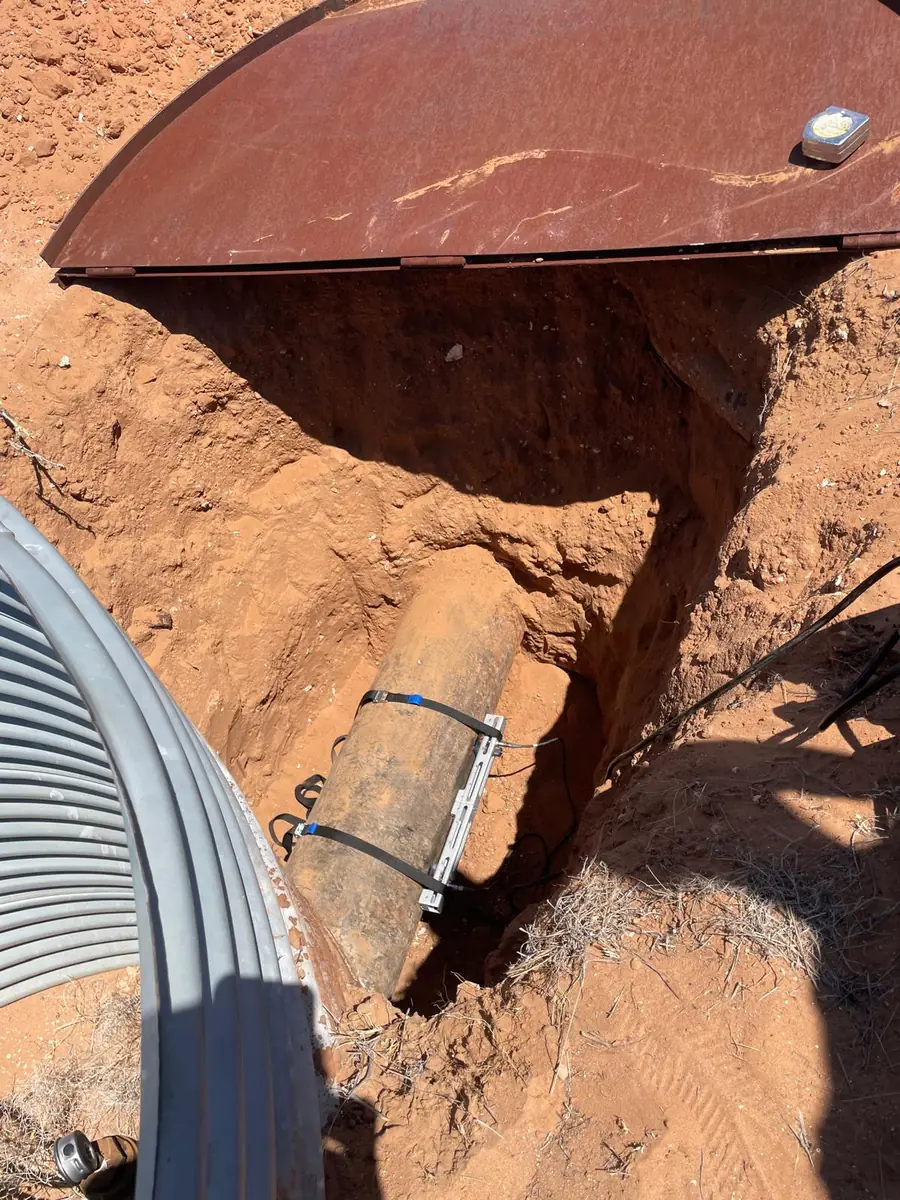
There are two clamp-on ultrasonic technologies, and picking the wrong one is the most expensive mistake in this category. They are not tiers. They are not "good" and "better." They are opposites, and each one fails at exactly the job the other one does.
| Transit-time | Doppler | |
|---|---|---|
| What it measures | The time difference between a pulse traveling with the flow and against it | The frequency shift of sound reflected off particles or bubbles moving in the flow |
| Needs the liquid to be | Clean. Acoustically clear, so the pulse crosses the pipe | Dirty. Carrying solids or entrained gas to reflect off |
| Typical fluids | Potable, chilled and hot water, glycol, DI water, fuels, oils, solvents, clean chemicals | Raw sewage, sludge, mine tailings, slurries, pulp stock, aerated effluent |
| Fails when | The liquid is heavily laden with solids or gas — the signal scatters and the meter drops out | The liquid is too clean — nothing to reflect off, and there is no reading at all |
| Typical accuracy | 1–2%, to 0.5% field-calibrated. The choice for anything approaching a measurement of record. | ~1%, a function of flow profile. Excellent for trending and control; rarely for billing. |
| Seztec instruments | Ultraflux UF801-P, Minisonic II P, Minisonic Fixed; Seztec Ultra ProLite, IC-UPF | Compu-Flow C6 Portable, C6 Fixed |
The rule of thumb that survives contact with reality: if you can see through it, use transit-time. If you cannot, use Doppler.
Clamp-on meters have a reputation in some plants for being unreliable. That reputation is almost always earned by a bad installation, not a bad instrument. Four things decide whether your meter reads correctly, and only one of them is the meter.
An ultrasonic meter measures velocity across an acoustic path and infers volumetric flow from the pipe's cross-section. That inference assumes a fully developed, symmetric flow profile. Put the transducers immediately downstream of an elbow, valve, tee, reducer, or pump and the profile is skewed, swirling, or both. The meter faithfully reports what is happening on its path — which is no longer representative of the pipe. Your reading is wrong, and it looks perfectly plausible on the display.
On an 8-inch line, 10 diameters is 80 inches. Nearly seven feet of clean pipe before the meter. Plants routinely do not have it, and routinely install anyway. That is where the bad reputation comes from.
The signal has to get through the pipe wall, twice. Steel, stainless, copper, and PVC generally cooperate. What causes trouble: heavy internal scale; delamination between a liner and the wall; cement-mortar-lined ductile iron, where an air gap behind the liner will stop the signal cold; concrete; and coarse cast iron that scatters ultrasound. Any air gap anywhere in the acoustic path is effectively an acoustic wall.
Between the transducer face and the pipe there is a microscopic film of air, and air is where ultrasound goes to die. Couplant displaces it. Use enough, and use the right grade for the pipe temperature — standard gel bakes out on hot lines, and a permanent install needs a couplant that survives years, not the week your survey took.
The pipe must be full. Every time. A partially full pipe will produce readings somewhere between meaningless and actively misleading — typically double the real flow, because the meter multiplies velocity by the full pipe area. If your line is not reliably full, a clamp-on meter is the wrong instrument and no amount of careful installation will fix that. Tell us and we will say so before you buy.
Someone bought a good instrument, mounted it four diameters downstream of an elbow, on cement-lined ductile iron, with a thumbprint of couplant. Then concluded that clamp-on does not work. All three are fixable, and all three are free to fix if you catch them before you tighten the strap.
No. That is the entire point of the technology. Clamp-on transducers mount on the outside of a live, pressurized, flowing pipe. No cut, no weld, no flange break, no process interruption. A typical install is under an hour once the pipe surface is prepared.
Transit-time clamp-on meters typically deliver 1–2% and reach 0.5% with field calibration. Accuracy is dominated by installation quality, not by the electronics — straight-run compliance, pipe wall condition, and the accuracy of the pipe dimensions you enter at setup. A meter with a wrong wall thickness typed in will report a confident, precise, wrong number. Doppler meters are around 1% and are chosen for their ability to read dirty fluid at all, not for precision.
An inline meter is installed into the pipe — the pipe is cut and the meter becomes part of the run. A clamp-on meter is installed onto the pipe and never touches the fluid. Inline generally offers higher accuracy and works on small pipes and low flows where clamp-on struggles. Clamp-on offers zero downtime, zero leak path, zero pressure drop, no wetted parts, and dramatically lower installed cost on large pipes.
Steel, stainless, copper, and PVC are straightforward. Ductile iron with cement mortar lining is the classic problem case — an air gap behind the liner will stop the signal. Concrete, heavily scaled pipe, and coarse cast iron can also defeat the meter. Send us the pipe material, wall thickness, and lining and we will tell you honestly before you buy.
10 pipe diameters upstream, 5 downstream, and 30 diameters downstream of a pump discharge. Less than that and the flow profile has not recovered; the meter will report a velocity that is real but not representative of the pipe. See the installation guide for what to do when you do not have it.
No, and this is the failure mode that catches people. A clamp-on meter multiplies measured velocity by the full pipe area. On a half-full gravity line it will report roughly double the real flow, and nothing on the display will indicate a problem. If your pipe is not reliably full you need an area velocity meter instead.
Yes. Seztec rents portable clamp-on flow meters nationwide from Houston. If you have a one-off survey and no ongoing need, renting is usually the right financial answer and we will say so. See flow meter rental.
Pipe size, pipe material, wall thickness, lining, fluid, and roughly how much straight run you have. That is everything an application engineer needs to give you a real answer — including the answer that clamp-on is wrong for your line.
Request a quote